Digital Freight Forwarders vs Traditional Freight Forwarders
Digital platforms offer faster quotes and real-time tracking.
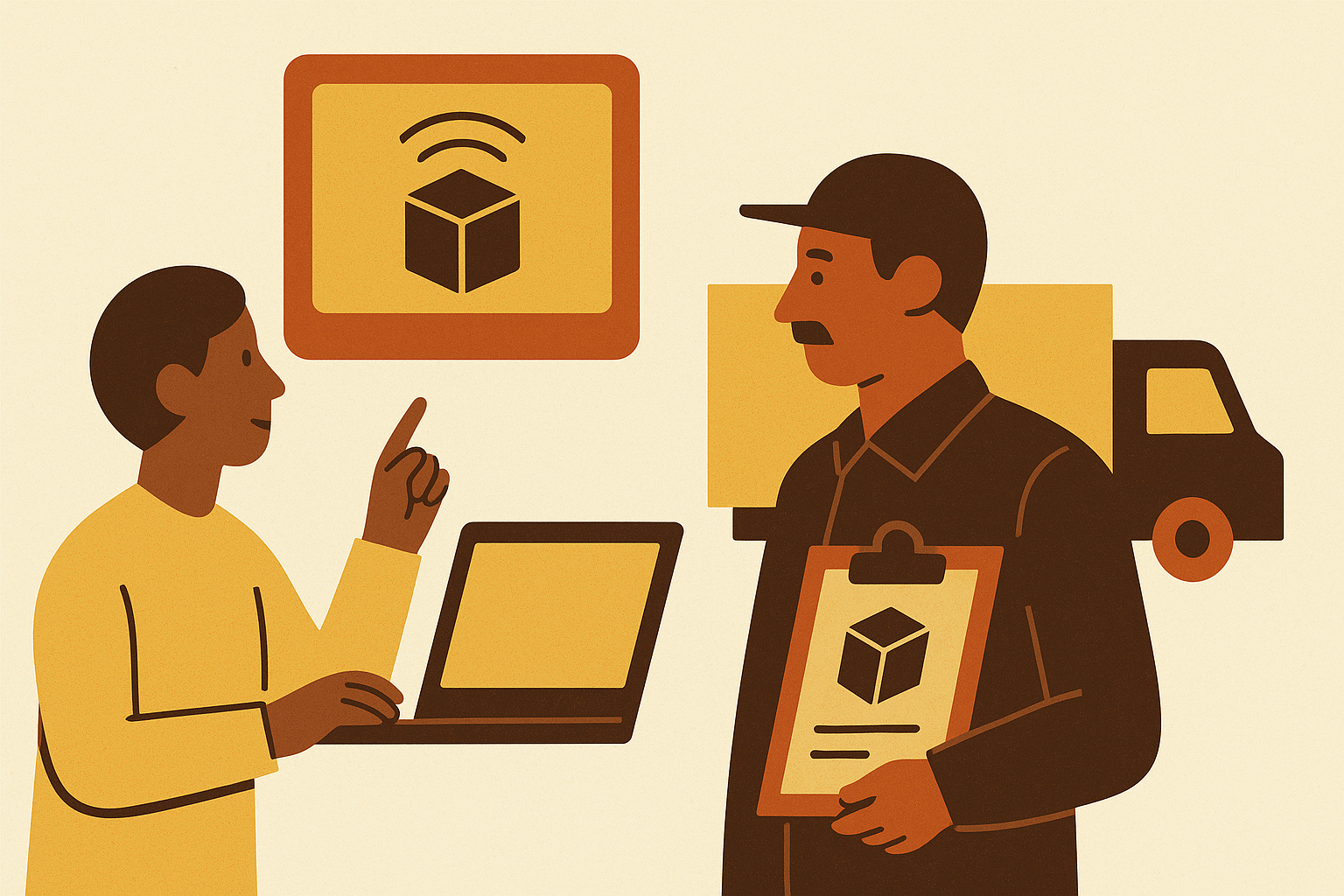
Freight forwarding is the business of moving goods across borders: getting a quote, booking space, filing paperwork, clearing customs, tracking the box, sending the invoice. That job now gets done two very different ways, and this piece walks through both, laying out which one fits which shipment.
How the day-to-day workflow differs for a shipper using each model
Ask a traditional forwarder for a rate and you'll email someone, or maybe call. That person checks carrier availability, maybe pings a colleague, and gets back to you somewhere between one hour and two days later depending on the lane. Ask a digital forwarder and rates are already sitting there, pulled together and updated automatically. You can book in minutes instead of waiting out the workday.
Tracking works on a similar split. With a traditional setup, you find out where your cargo is by calling your agent and asking, with a person in the middle relaying information they had to go get. Digital platforms rely on a different relay: GPS data, IoT sensors, and carrier feeds show live status, and the system fires an alert when something hits a milestone or goes sideways.
Then there's paperwork, which is where the traditional model shows its age most plainly. Someone is manually typing data out of a bill of lading, a packing list, a commercial invoice, and every keystroke is a chance for a typo that turns into a customs delay three weeks later. Digital platforms use AI extraction to pull those fields straight into the shipment record, parsing incoming emails, booking confirmations, and carrier contract PDFs into structured data with minimal manual retyping.
Pricing transparency follows the same logic. Traditional pricing tends to arrive in installments: base freight now, fuel surcharge later, terminal handling fee at some point after that, customs charges whenever they surface. Digital platforms put every line item in front of you at the moment of quote, which is either refreshing or slightly annoying depending on how much you enjoy surprises.
And customer service is the one place the traditional model keeps a real edge worth naming here, even though the rest of this piece will get into that more. A named agent who knows your account and picks up the phone during business hours is a different experience than a support ticket in a tiered queue, even a well-designed one.
Where digital forwarding has a genuine edge
For shipments that repeat, on lanes that are predictable, digital wins on cost. Platforms pull rates from multiple carriers at once, which puts pressure on pricing the way a farmers market puts pressure on price when six vendors are selling the same tomatoes. Cut out the manual re-entry and the back-and-forth coordination, and regular shippers using digital platforms have reported savings in the range of 15 to 30%, per exfreight.com.
Visibility is worth more than it sounds. Real-time tracking isn't just a nice dashboard; it means you can adjust inventory before a delay becomes a problem, tell your customer a real delivery date instead of a hopeful one, and see live margin on every shipment instead of waiting for a report someone builds by hand at month's end. Traditional forwarders can offer that too, but usually only with custom BI tooling bolted on, requiring extra build work most companies would rather avoid.
This matters most for smaller importers and exporters, who used to need serious volume just to get decent rates and real tools. A 15-person forwarding company can now run quotes, tracking, and billing on a cloud platform for something like $200 per user per month, putting them roughly on par, tool for tool, with companies twenty times their size. That shift used to require a dedicated logistics department and now requires a laptop and a subscription.
Scalability is the other quiet advantage. A platform absorbs a volume spike without forcing you to hire five people to handle it, which matters a lot if you sell seasonal goods or run an e-commerce operation where demand swings by the month. Venture capital seems to agree: over $8 billion went into digital freight tech in 2024, with 2025 tracking even higher, which tells you investors think this efficiency gap is real and getting wider.
Where traditional forwarding still holds the advantage
None of that helps you much if your cargo is oversized, hazardous, temperature-controlled, or moving through five modes of transport and a port that doesn't run on anyone's schedule but its own. Those situations need judgment as much as software. An experienced agent who's rerouted a stranded shipment mid-ocean before knows who to call and what favor to call in; a self-service portal gives you an escalation button and a queue.
Relationships still buy things that money and good UX can't always buy fast enough. Space on a constrained trade lane, say transpacific during a rate spike, tends to go to forwarders with volume and history, not to whoever clicked book first on a marketplace. Same goes for customs nuance: an agent who's worked a specific port for years, who knows which officer needs which form filled out a certain way, is hard to replace with an algorithm, however good that algorithm gets.
Accountability matters most exactly when things go wrong, which is an inconvenient truth about logistics generally. Cargo gets detained, paperwork gets rejected, a vessel gets diverted somewhere nobody planned for, and at that moment, having a named account manager with actual authority to fix things beats a tiered support ticket that has to escalate three times before someone with authority even sees it. Digital platforms are working on this. It's still a gap.
High-value or politically sensitive cargo, luxury goods, aerospace parts, pharmaceuticals, tends to need an advisor who understands what a mistake actually costs. Flexport's own trajectory says something here: as the company moved upmarket toward bigger, more sophisticated shippers, it added human account teams, a sign that pure self-service has a ceiling.
The incumbent response: how the largest traditional forwarders are closing the digital gap
The scale on the traditional side is worth sitting with for a second, because it's easy to picture "traditional forwarder" as an outdated, low-tech operation. DSV became the world's largest freight forwarder in 2025 after closing its roughly EUR 14.3 billion acquisition of DB Schenker, and the combined company now does around USD 46 billion a year in revenue, employs about 150,000 people, and runs operations in more than 90 countries. DHL Global Forwarding sits at $33.87 billion, Kuehne+Nagel at $31.66 billion. These are companies with the resources to respond to a startup eating at their margins, and they have.
Kuehne+Nagel's myKN platform is a good example of what that response looks like: instant quotes, booking, and shipment visibility built into a shipper-facing interface that a lot of people in the industry consider one of the more polished ones going. Their API integrations pull quotes from multiple carriers at once, the same trick digital-native platforms use, deployed by a company that's been in this business since 1890.
There's an interesting wrinkle in how the market prices all this. Sacra estimated Flexport's 2024 revenue at $2.1 billion, with a secondary-market valuation implying something like a 1.2x revenue multiple, while DHL and Kuehne+Nagel trade closer to 0.8x. That premium is a bet on growth, sure, but it's also a reminder that Flexport is still working toward the kind of steady profitability the century-old incumbents already have. Growth is exciting. Profitability pays the bills.
Which raises the actual question a shipper should be asking: what platform does this specific forwarder actually run on, today, for my account? The label on the company matters less than the tools sitting underneath it.
The market context that makes this choice more consequential now
Zoom out and the numbers explain why this decision carries more weight than it used to. The global freight forwarding market sits around USD 225.4 billion in 2025 and is projected to hit USD 340.1 billion by 2033, a 5.4% annual growth rate according to Grand View Research. That's a mature market, growing steadily, with margins under real pressure.
The digital slice of that market is growing roughly five times faster. SkyQuest put the digital freight forwarding segment at USD 54.04 billion in 2024, projecting it to reach USD 405.56 billion by 2033 at a 25.1% compound annual growth rate. In the U.S. specifically, digital freight forwarding hit USD 8.25 billion in 2025 and is projected to reach USD 23.57 billion by 2031, per Mordor Intelligence, a 19.12% annual growth rate. However you slice it, shippers are increasingly building their operations around these tools rather than treating them as a side experiment.
Real-world chaos is part of why. The Houthi attacks in the Red Sea forced a wave of rerouting in 2024, and shippers with live, real-time visibility reacted faster than those waiting on an agent to call back with an update. U.S. tariff uncertainty through 2025 is pushing companies to pull shipments forward on tighter timelines, and when your decision window shrinks from days to hours, quote speed becomes central to the whole operation.
Put faster market swings next to tighter margins, and the cost of picking the wrong model for a given shipment goes up. A slow quote on a time-sensitive lane costs you money. A missing relationship on a complex, high-value move can cost you a lot more than money.
A practical framework for matching forwarder type to shipment situation
Three things really drive this decision, and none of them are exotic. First, complexity: standard containerized cargo on a well-traveled lane is a great fit for digital; anything oversized, hazardous, temperature-sensitive, or multi-modal wants a human who's handled that exact headache before. Second, visibility needs: if you're managing tight inventory cycles or promising customers real delivery windows, live tracking is core infrastructure. If your timelines are loose, you may not need to pay for that capability at all. Third, relationships: high-volume shippers on constrained lanes, or anyone operating in a market where local knowledge decides how fast customs moves, benefit from a forwarder with actual carrier relationships on the ground.
That points toward digital for a fairly specific set of shippers: SMEs on standard FCL or LCL lanes with steady volume, e-commerce sellers who need self-service booking and live delivery visibility, procurement teams who just want to benchmark rates across carriers without ten separate emails.
It points toward traditional, or at least a strong human layer, for shippers moving hazmat, oversized, perishable, or high-value cargo that needs case-by-case judgment calls; companies working in markets where informal relationships materially speed up clearance; and large shippers who need an account team that can actually negotiate space during a capacity crunch, not just submit a request and wait.
Most shippers of any real size end up running both, which is worth admitting plainly rather than pretending one model wins outright. A digital platform handles the standard lanes and gives you visibility; a relationship-driven forwarder handles the complicated, high-stakes stuff. The catch is data fragmentation: two forwarders means two tracking systems, and now nobody has one clean view of total freight spend or performance across the business. Some platforms, including ones that pair workflow software with actual human logistics expertise on the same account, are built specifically to close that gap by keeping both capabilities on one data layer instead of two separate ones.
Whatever you land on, ask any forwarder the same three questions before signing anything. What platform does your team actually use to run my shipments, and can I see that data myself? Who's my named contact when something goes wrong, and what authority do they actually have to fix it? And how fast can you quote me when rates spike or capacity disappears? The answers will tell you more than the label on their homepage ever will.