AI Route Optimization Software for Last-Mile Delivery
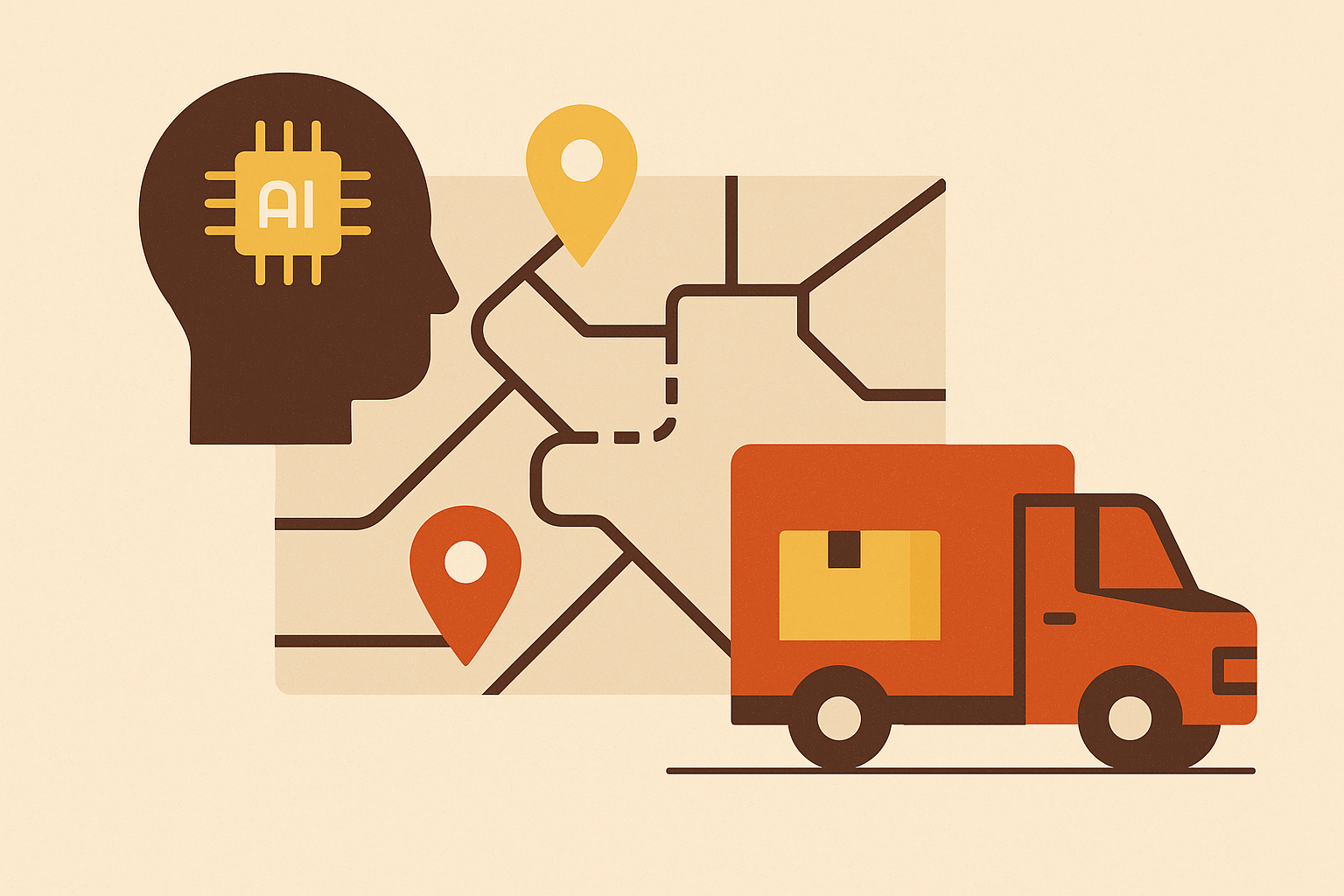
AI learns from past failures to reroute deliveries in real time.
Last-mile delivery used to be the boring last chapter of the supply chain story. Now it's the most expensive one: the global last-mile market hit $167.3 billion in 2025 and is headed toward $348.8 billion by 2033, growing at a 9.8% annual clip according to Grand View Research. Nearly 70% of that spend comes from e-commerce's B2C side. This piece looks at why static routing tools broke under that pressure, and what changes when AI actually takes over the job.
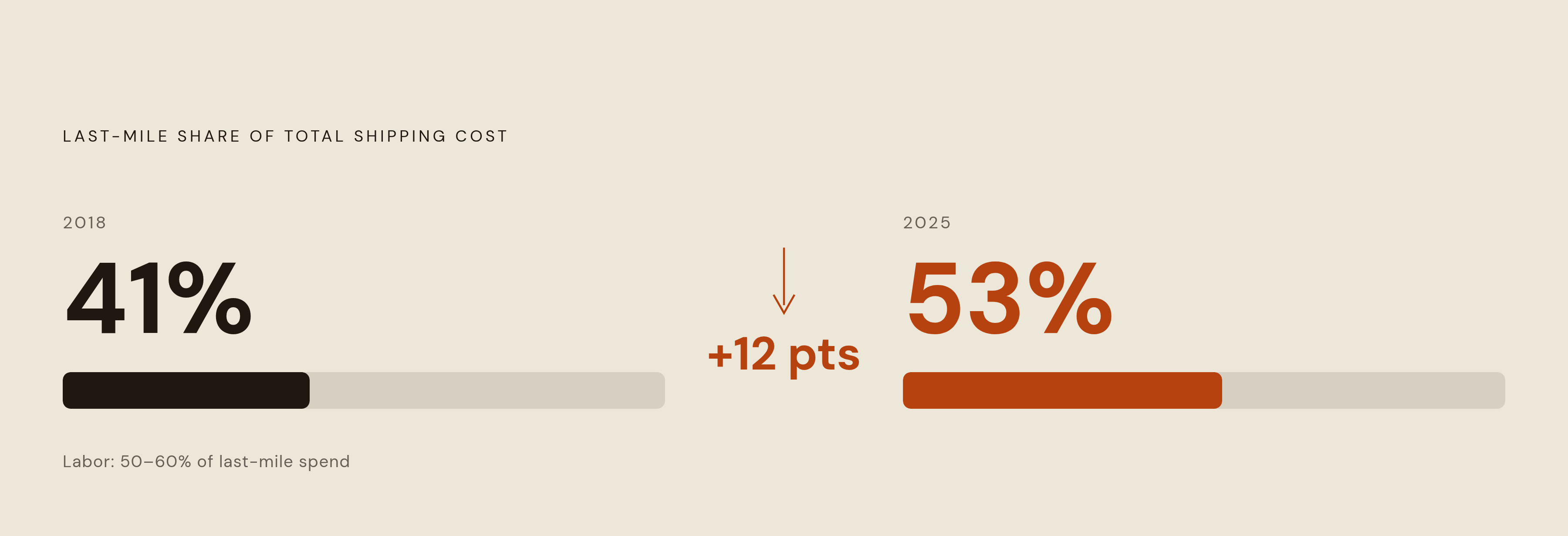
Here's the number that should make any operator sit up: last-mile now eats 53% of total shipping costs, up from 41% in 2018. U.S. delivery costs rose 12% between 2024 and 2025 alone. Labor eats 50 to 60% of last-mile spend, so the shortest leg of the journey somehow drains the most money out of it. Throw in that 68% of the world's 22.4 billion shipments in 2024 landed in cities, where every delivery becomes a small standoff with parking restrictions and gridlock, and the old planning tools start buckling under a job nobody designed them for.
The specific pressures that make last-mile routing uniquely hard to solve without AI
Three problems stack on top of each other here, and none of them cooperate: failed deliveries, empty running, and customer expectations sprinting ahead of what most carriers can physically pull off.
Start with failed deliveries. About 5% fail on the first attempt, for a range of reasons including address errors. That sounds small until you multiply it across tens of millions of packages a year, at which point it turns into a real line item on someone's budget. Failures cluster: certain neighborhoods, certain times of day, certain stop types. A static plan can't see that coming, since it was built to look forward at a fixed sequence, never backward at what actually happened last time.
Empty running is the quieter cost, the one nobody puts on a dashboard. Industry data puts deadhead miles at roughly 16.7% of all U.S. truck miles; separate figures show 21.6% of road freight distance in Europe in 2024 was driven with nothing in the truck, according to industry data. Trucks get sent out without anyone working out the return trip or hunting for a load to fill the empty space, and the fuel burned on those empty miles is just the visible edge of that planning gap.
Then there's the customer, who doesn't care about any of this and just wants their package. Ninety-eight percent say the delivery experience shapes how they feel about a brand, and 62% care more about an accurate ETA than raw speed. Major carriers have pushed same-day and next-day delivery at a scale that has reset expectations for every operator that doesn't have a comparable warehouse footprint sitting behind it. Most companies can't build their way out of that gap. Their only real lever left is squeezing more intelligence out of the trucks and drivers already on payroll.
There's a regulatory headache sitting on top of all this, too. Last-mile transport accounts for roughly 54% of transport-sector emissions and 13% of city emissions, and cities are starting to ban conventional delivery vans outright in certain zones. Delivery vehicle counts in cities are projected to climb 61% by 2030 if nothing changes. Research has found that businesses failing to fix last-mile operations risk meaningful profit erosion over a multi-year horizon.
What static route planning gets wrong that AI is designed to fix
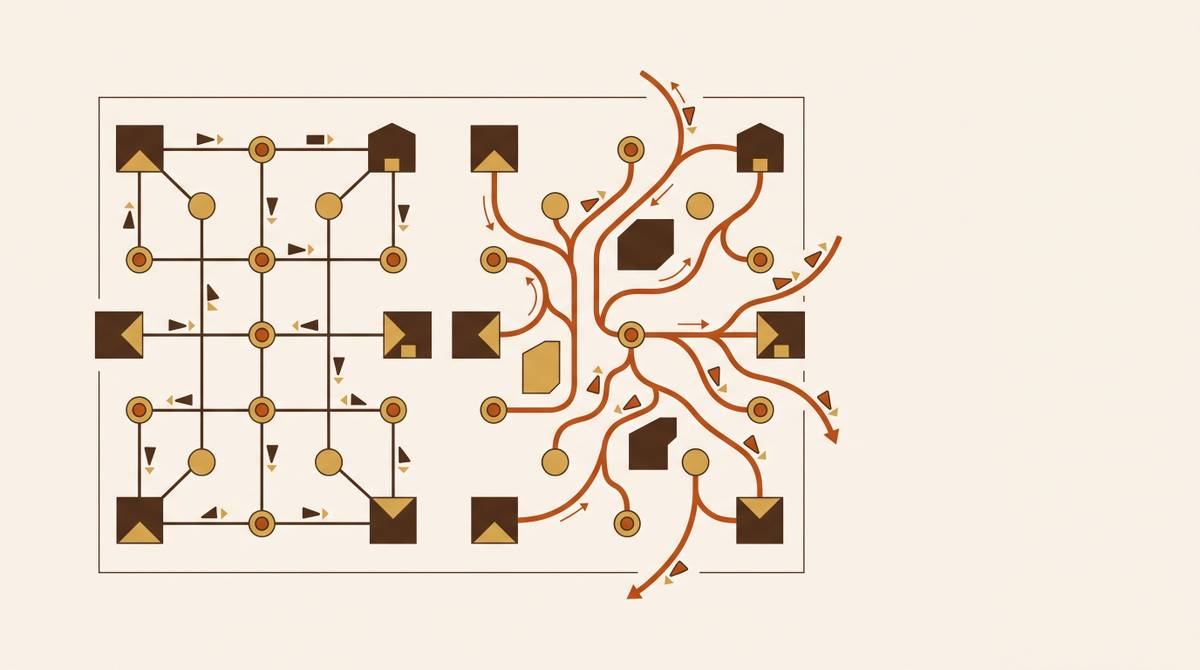
Static routing makes one big bet every morning and hopes the day behaves itself. It doesn't. Traffic shifts, a driver runs late, a delivery at stop 4 fails and now the plan for stops 5 through 20 makes no sense, and a new order drops into the queue at 11 a.m. A fixed sequence has no way to absorb any of that. It just keeps running yesterday's assumptions against today's mess.
Human dispatchers can juggle a small fleet by feel, the way an experienced planner tracks details without writing anything down. That instinct hits a wall once stop counts climb into the thousands across multiple regions, because the number of possible route combinations explodes faster than anyone can track in their head, let alone solve by hand. And it's not just sequencing. Enterprise routing has to satisfy time windows, vehicle capacity, weight limits, driver certifications, hub cutoffs, access restrictions, and customer-specific service terms, all at once, not one after another. Static tools tend to solve these one at a time, which means fixing one constraint quietly breaks another three stops down the road.
An AI system brings raw speed, but the sharper advantage is that it keeps recalculating as the day unfolds, turning routing from a one-shot morning chore into a continuously updated plan for the fleet.
How AI route optimization actually works: from historical learning to real-time re-routing
AI routing engines start by training on historical delivery data, hunting for patterns no human planner has time to notice. Recurring congestion near one hub. Longer dwell times at certain stop types. Address clusters that fail more than they should. Locus cites research showing models trained on historical route data improved prediction accuracy by more than 35% compared to human-only planning across multi-geography deployments, which matters a great deal when you're juggling thousands of stops a day.
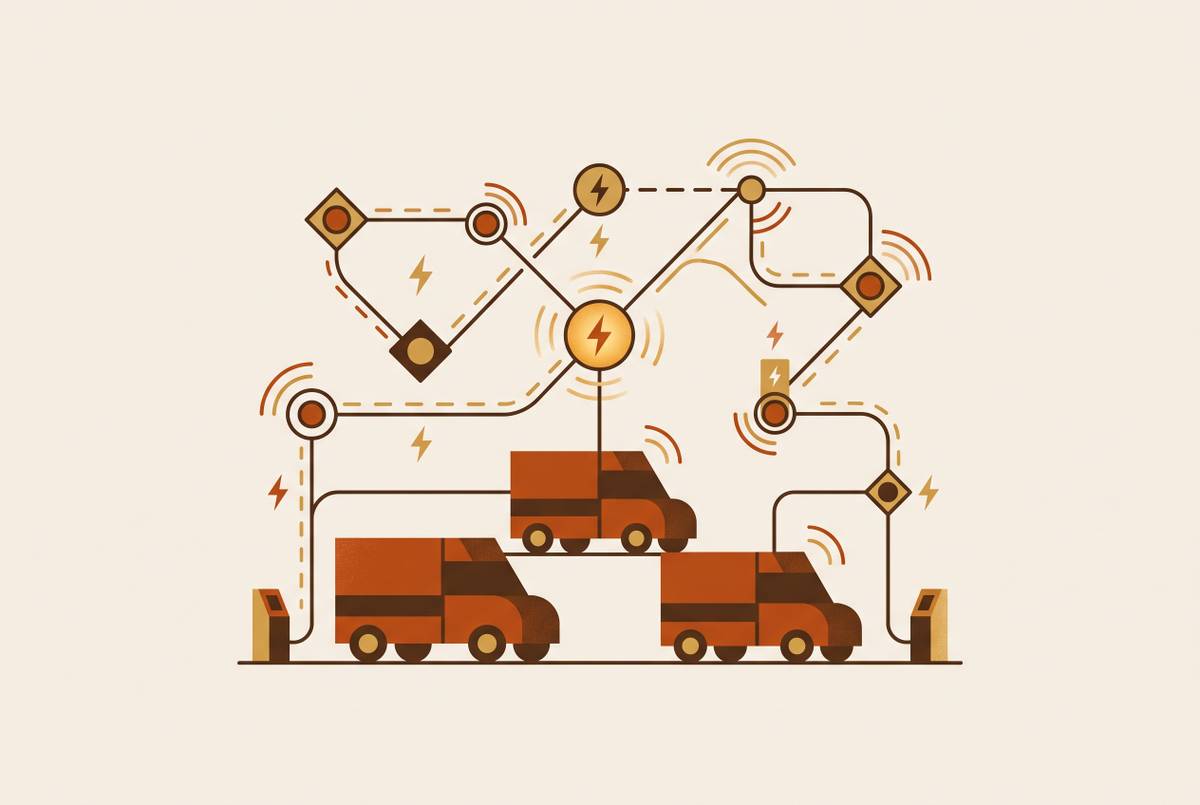
Once live, the system pulls in a constant stream of real-time signals: GPS, traffic feeds, weather, curb access rules, geofenced events, last-minute order changes. That lets it compute a micro-ETA for each individual stop instead of one vague route-level guess. When something breaks, a road closure, a driver falling behind, the system recalculates every downstream stop and can shuffle deliveries across other drivers on the fly.
This is where the gap between a maps app and actual route optimization software gets obvious. The serious engines solve against hundreds of real-world constraints at once: vehicle capacity, driver hours-of-service limits, access restrictions, SLA tiers, time windows. A phone map solves for one car and one destination, a narrower problem with a narrower payoff.
The next layer showing up in more mature operations is the digital twin, a virtual model mirroring the fleet, warehouse inventory, traffic, and demand in real time. McKinsey's 2024 study found these let companies simulate disruptions and adjust schedules before a problem spreads through the network. The same engine computing the route often feeds customer texts directly, so the "where's my order" message shows up before the customer thinks to send it.
What measurable improvements operators actually report after deploying AI routing
Early adopters commonly report meaningful immediate efficiency gains, climbing higher as the models pull in more operational data over time.
Industry analyses have found optimized routing trims mileage and fuel use by double-digit percentages. On-time delivery rates, across reported deployments, typically climb substantially, the kind of jump that changes how a customer service team spends its whole day. Digital twin deployments have been associated with meaningful gains in on-time performance, reductions in labor costs, and a revenue bump tied directly to better reliability.
There's a smaller effect worth mentioning too: live GPS tracking paired with automated notifications cuts inbound "where's my package" calls by roughly 10% and misdeliveries by around 25%. Broader estimates put total cost reduction from AI-powered logistics platforms at significant double-digit levels. Returns are quietly becoming their own battlefield. U.S. retail returns have grown to represent a massive and rising share of online purchases, so optimizing the return trip is turning into as big a job as optimizing the delivery ever was.
Worth a pause here: these numbers come from vendor studies and early-adopter case data, so treat them as a range, not a promise. Results shift with fleet size, stop density, and how clean the underlying data is. Weigh expected gains against your own baseline, not somebody else's press release.
How UPS ORION became the benchmark for enterprise AI route optimization
UPS launched ORION in 2013, making it one of the earliest enterprise-scale AI routing systems anywhere, and it's still the yardstick everyone in logistics measures against. The system chews through billions of data points daily and keeps retraining itself on new route outcomes. It gets sharper the longer it runs, which is the part that actually matters.
The most famous quirk is the right-turn heuristic. ORION learned to favor right-hand turns over left-hand ones, skipping the wait to cross oncoming traffic, which cuts idling, fuel burn, and accident risk all at once. The data pointed there, and the routing just followed.
The payoff is hard to overstate. ORION cut the distance UPS trucks travel by a reported hundreds of millions of miles a year, generating substantial annual savings. UPS spent heavily building it and, by most accounts, recovered that investment relatively quickly. For anyone shopping for a platform today, the lesson is that value compounds over time. Today's ORION beats the 2013 version because it's had over a decade of real outcomes to learn from, not because someone rewrote the code from scratch.
DHL and FedEx back this up at their own scale. DHL has reported meaningful cuts in total transportation spend across its European network from AI-powered routing. FedEx has invested in real-time operational monitoring tools designed to step in before a small disruption turns into a big one.
The capabilities that separate genuine AI route optimization platforms from basic routing tools
The route optimization software market was valued at $7.92 billion in 2025 and is projected to hit $16.78 billion by 2031, growing at a 13.32% annual rate, according to Mordor Intelligence. That's a crowded field, and not everyone in it is actually doing AI. Some are just doing routing with a nicer dashboard bolted on top.
Multi-stop sequencing, time windows, vehicle capacity limits: those are the entry fee now, not a real differentiator. What actually separates the AI-native platforms comes down to a handful of questions. Does the system re-optimize mid-route, or only before the trucks leave the yard? Does it produce a predictive ETA per stop based on historical dwell data and live traffic, or a static number calculated once at 6 a.m. and forgotten by 6:15? Can it juggle driver certifications, access restrictions, SLA tiers, and hub cutoffs all together, instead of fixing one constraint and breaking another? And does the model actually learn from delivery outcomes over time, or run the same math today it ran on day one?
None of that matters if the data feeding the system is unreliable. A routing engine is only as sharp as its connection to the TMS, WMS, ERP, and traffic APIs it pulls from; a poorly fed algorithm will still send a truck down a road that closed last Tuesday. Scalability matters too. Can the platform handle a mixed fleet of owned vehicles, contracted carriers, and gig drivers, and does it support both hub-and-spoke and direct-injection models? Given how large returns volume has gotten, ask about reverse logistics support directly. Don't assume it's included just because it should be.
Press vendors on specifics. How many constraints does the engine actually solve per computation? How fast does it re-optimize when something breaks? Can they show real before-and-after mileage and on-time numbers from an operator your size, not their biggest logo?
Leading AI route optimization platforms and what distinguishes them
The market splits into enterprise logistics suites, standalone optimization engines, and delivery management platforms. Matching the category to your own scale matters more than chasing the biggest name in the room.
Locus builds for high-constraint environments, designed to solve against a large number of real-world constraints per computation, which fits large carriers and retailers running mixed fleets across several regions. It also offers digital twin capability and predictive analytics alongside the core routing engine.
FarEye leans into last-mile visibility and real-time orchestration, fusing historical dwell data, weather, curb rules, and geofenced events into micro-ETA forecasts. It has a track record with retail and e-commerce operators who care as much about what the customer sees as what the backend math produces.
LogiNext pairs AI route planning with automated dispatch and driver management, aimed at mid-to-large enterprises across retail, FMCG, and third-party logistics, with faster deployment and a constraint model you can configure yourself rather than wait on a vendor to touch.
Nuvizz runs cloud-native, built for carriers and shippers managing complex, multi-stop urban delivery networks, folding optimization together with driver communication and proof-of-delivery workflows.
SmartRoutes sits at a more accessible entry point, built for smaller fleets scaling up that need dynamic re-routing, customer notifications, and proof-of-delivery in one place, without the implementation slog of a full enterprise suite.
The right pick depends on your stop density, fleet mix, and integration environment, and on whether the priority is squeezing efficiency out of pre-dispatch planning, reacting well in real time, or improving what the customer actually feels on their end.
What to assess before committing to an AI route optimization platform
Data readiness is the part most vendors skip past in the sales pitch, and it's the part that decides everything else. AI routing gets better as it trains on your delivery history: your failure patterns, your dwell times, your particular traffic quirks. Operators sitting on years of clean, structured delivery data walk in with a real head start. Operators with fragmented, incomplete, or siloed records will spend the first several months just teaching the system things that should have been obvious on day one.
So before signing anything, take an honest look at what shape your own data is actually in, separate from whatever a sales deck assumes it's in. That answer decides how fast, or how slowly, you see the numbers this piece just spent several sections describing, and it's usually the difference between a platform that pays for itself in a year and one that just sits there quietly disappointing everybody.