Autonomous Sourcing Agents for Spot Buy Procurement
Autonomous agents handle routine spot buys end-to-end without human approval gates.

The core distinction is not intelligence; it is agency. Prior procurement software surfaced information for a human to act on. Autonomous agents act. They initiate tasks, execute transactions, update systems, and escalate only when thresholds require human judgment. That shift is categorical, not incremental.
The copilot analogy is useful here. Most AI-enhanced procurement tools keep a human in the loop at every decision point: the AI suggests, the human approves, the process moves forward. That model improves individual decisions but does nothing for throughput. You still need someone at every gate. The agentic model removes those gates for routine transactions. The system initiates, executes, and completes without waiting for anyone to pick up the baton.
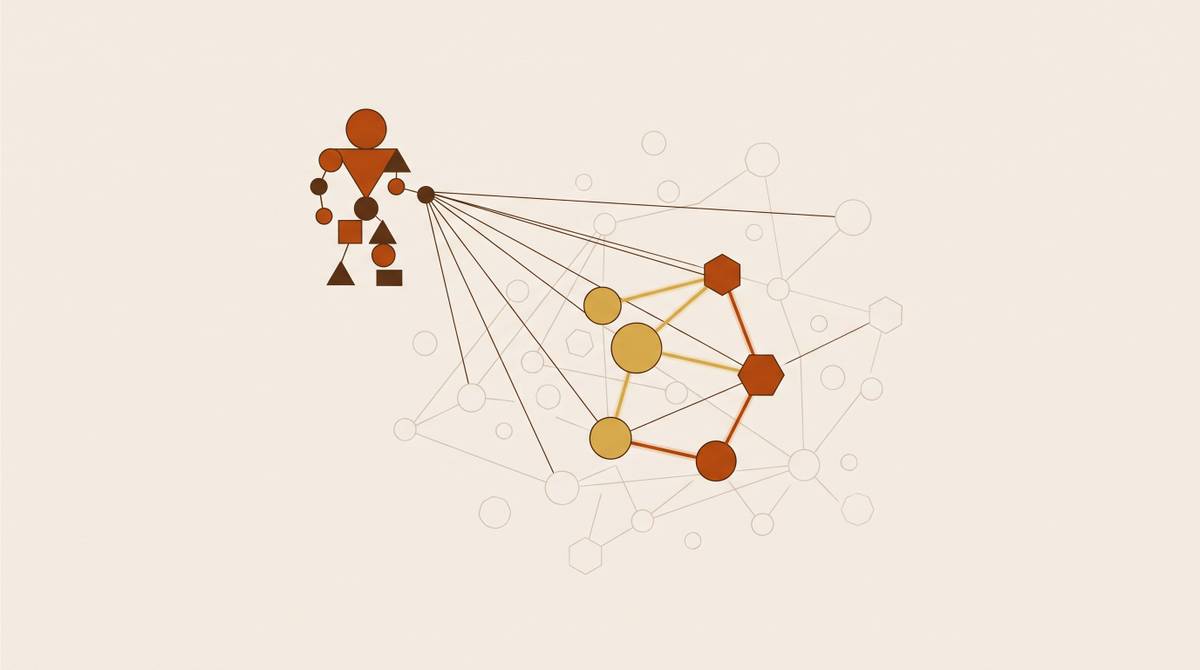
Architecturally, these systems run as an orchestration agent coordinating specialized sub-agents across the sourcing lifecycle. One handles supplier risk and ESG assessment. Another manages RFQ generation and distribution. Another evaluates bids. Another executes negotiation within defined parameters. The orchestration layer sequences their work, resolves conflicts between outputs, and maintains continuity across the full cycle. No human handoff is required to move between phases.
The practical test is what these agents do without being prompted: analyze supplier risk, trigger and issue RFQs, compare bids against weighted criteria, escalate compliance issues, negotiate within guardrails, update ERPs, close approval loops. Integration is what makes or breaks this. An agent that cannot read and write to SAP, Oracle, or Coupa in real time can generate insight but cannot execute. It becomes, at that point, a sophisticated dashboard. Real-time read-write access is the technical line between advisory and autonomous, and there is no workaround.
Spot buy suits the agentic model for reasons anyone who has managed tail spend will recognize immediately: high transaction volume, low strategic complexity per individual transaction, and genuine premium on speed over deliberation. These are exactly the conditions where requiring a human at each step is the bottleneck, not the safeguard. Agents still operate within human-set parameters, including spend thresholds, approved supplier pools, escalation rules, and negotiation guardrails. Autonomous does not mean unsupervised.
How Agents Detect Sourcing Needs and Select Suppliers Before a Human Notices a Gap
The sourcing cycle starts without a purchase request. Rather than waiting for someone to recognize a gap and submit a form, agents detect need through continuous integration with ERP systems, inventory platforms, and production data.
An agent monitoring stock levels against production schedules can identify an impending shortfall days before it becomes an operational emergency. Contract lifecycle monitoring flags expiring supplier agreements or deteriorating performance scores before any procurement professional has reviewed the situation. The need surfaces before the crisis does. That is a fundamentally different operating rhythm than anything a manual process can achieve, and the difference compounds across thousands of transactions.
The consequences at scale are documented. An aircraft manufacturer that deployed agents to automate order execution and inventory management, tied directly to production planning data, cut active inventory by 30%, contributing roughly $700 million in EBIT improvement. The mechanism was not faster reaction to known problems; it was earlier detection before problems had time to compound.
Supplier selection in this model does not begin from scratch each time. Agents access pre-vetted supplier pools enriched with external market intelligence, apply ESG and compliance scoring at the point of selection, and factor in tariff exposure and supplier concentration risk as part of the initial decision. Total value, not unit cost, is the selection metric. What this replaces is a sequence of manual steps: recognizing the gap, drafting the request, researching suppliers, checking compliance status. Compressing that sequence to near-instantaneous detection and selection changes the economics of every individual transaction.
One caveat worth stating plainly: spend analytics agents are only as reliable as the data they read. Fragmented PO records across business units and currencies produce misleading signals. Supplier selection based on incomplete spend history generates suboptimal decisions. This is a precondition for agent performance, not a problem the agent resolves on its own.
How Agents Generate and Manage RFQs Without Procurement Staff Involvement
RFQ generation in the agentic model is not template-filling. The agent selects the appropriate sourcing instrument, whether a spot buy RFQ, a reverse auction, or a multi-tier sourcing event, based on category, spend level, and urgency. The resulting package is tailored to the category rather than pulled from a generic form.
Supplier communication is then managed autonomously from issuance through resolution. The agent issues the RFQ, handles incoming clarification queries without human mediation, routes responses, tracks status, and synthesizes the full interaction into a structured record. A McKinsey-documented pilot at a chemicals company used a dedicated agent to manage all supplier queries and clarifications during sourcing exercises, increasing procurement staff efficiency by 20 to 30%. The gain came from removing procurement staff from the query loop entirely, not from making them faster at managing it.
GSK's purchasing intake agent illustrates what upstream intervention looks like in practice. When staff submit supplier quotations, the agent examines pricing, vendor performance, and market intelligence before a sole-source purchase is approved. It catches decisions before they become purchase orders, which is where influence is actually possible.
Volume throughput is the governing advantage. Manual RFQ processes that take days compress to hours or less when the agent handles drafting, distribution, and follow-up without handoffs. One deployment has channeled the procurement intake of more than 4,500 suppliers through a single conversational agent interface. No human team replicates that scale without proportional headcount growth.
How Agents Evaluate Bids and Make Award Recommendations
Rule-based systems default to lowest price. Agentic systems default to whatever criteria procurement leadership configured, applied consistently across every response processed. Scoring is multi-dimensional: cost, delivery reliability, supplier risk, ESG performance, and compliance status are all factored simultaneously. The agent also simulates different award scenarios, cost-optimized versus risk-adjusted versus ESG-prioritized, so procurement leadership sees the tradeoffs before any decision is made rather than receiving a single ranked recommendation stripped of context.
Anomaly detection runs in parallel. The agent flags outlier pricing, compliance red flags, and responses that diverge materially from past supplier performance or current market data. This is where integrated spend data and external market intelligence stop being nice-to-have features and start being the actual mechanism of value.
McKinsey documented a technology company where one agent integrated spend and market data to generate real-time price trend insights while another simulated demand evolution under different market scenarios. Together they identified savings in the range of 12 to 20% in contact center operations spend and 20 to 29% in BPO and financial services spend. Those figures are not the product of sharper human judgment. They are the product of analytical depth that no manual process sustains across high transaction volumes, because humans simply cannot hold that many variables consistently across that many decisions without degradation.
Manual purchase order processes carry error rates in the low single-digit percentages. Agent-generated POs drop that rate sharply because every field is validated against source data before the PO is issued.
What agents cannot yet replace: complex commercial judgment in non-standard categories, new supplier relationships without performance history, high-value financial commitments that require executive accountability. Those remain human territory, and that boundary is appropriate. The practical implication is that agents absorb the analytical load on high-volume, lower-complexity spot buys, concentrating human judgment where it actually changes outcomes.
How Agents Handle Negotiation and Close Purchases Autonomously
Negotiation is the capability that catches procurement professionals off guard, because it is the domain most associated with irreducible human skill. That reaction is understandable, but it misreads what autonomous negotiation actually is. Agents do not negotiate freely. They operate inside parameters set by procurement leadership: price thresholds, acceptable payment terms, minimum service levels, escalation triggers. What they do within those parameters is execute at a scale no human team can match.
The Walmart and Pactum AI deployment is the reference case. An autonomous negotiation engine deployed across more than 2,000 suppliers achieved an average 3% gain across negotiations and extended payment terms by an average of 35 days. Sixty-eight percent of suppliers closed an agreement through the platform. Seventy-five percent reported preferring to negotiate with the AI over a human counterpart. That last figure is not a buyer-efficiency story. It is a supplier experience story. The agent is immediately available, consistent in its terms, and applies no social pressure. Suppliers, apparently, find that preferable.
GSK's sole-source negotiation agent addresses a different constraint. For purchases where competitive bidding is not triggered, a specialized agent intervenes to negotiate payment conditions and delivery schedules, extracting value from spend categories that conventional teams cannot reach because of resource limitations. Maersk is running autonomous supplier contract negotiation at scale across global operations, which confirms this is not a single-organization proof of concept.
Once terms are agreed, the agent writes back to the ERP, issues the purchase order, and closes the approval loop without any handoff for execution. Autonomous means no human handoff required for routine transactions. It does not mean unlimited AI authority. The threshold definitions, which determine what escalates and what does not, are the accountability mechanism, and they are set by the humans running the system.
What Agents Do After the Purchase: Monitoring, Performance Tracking, and Re-Sourcing
Most procurement systems treat the purchase as the conclusion. The agentic model treats it as a checkpoint.
After execution, agents continue monitoring supplier performance data and market price fluctuations in real time, renegotiating spot rates within approved limits when market conditions shift, and rerouting shipments proactively when service failure is anticipated before it materializes. If a supplier underperforms or a disruption appears, whether from a geopolitical event, a cyber incident, or a capacity loss, the agent initiates re-sourcing without waiting for a human to notice and escalate. The lessons from each disruption feed back into the system's training data, improving future decisions without requiring the kind of formal lessons-learned process that, in most organizations, never actually happens.
Invoice validation runs continuously. Agents validate invoices against source data and flag discrepancies before payment, not after. Compliance monitoring operates across the supplier base as an ongoing function rather than a periodic audit that surfaces problems months after they originated.
Every one of these post-purchase functions addresses a specific location where unmanaged spot buy leaks value. Zycus aggregate customer data shows improvements in spend under management and tail spend savings where agentic intake is deployed, and those outcomes depend on the post-purchase loop functioning correctly, not just on faster RFQs. The cycle closes only if the agent stays engaged through invoice resolution and feeds performance data back into future sourcing decisions. Organizations that deploy agents only at the intake end and walk away from the back end are leaving a substantial portion of the available value on the table.
Measured Outcomes from Organizations Running Autonomous Agents on Spot Buy and Tail Spend
The efficiency numbers from organizations running agents across the full source-to-pay cycle are consistent enough to treat as directional benchmarks. McKinsey has documented 15 to 30% efficiency improvements through agent automation of non-value-added procurement activities. The chemicals company pilot achieved a 20 to 30% staff efficiency increase plus measurable value capture improvement in the consumables category. Companies implementing automated spend analysis for the first time typically identify savings opportunities in the 8 to 15% range in their first analysis run, before any process maturity has developed.
The time redistribution story matters as much as the cost story, and it gets less attention than it deserves. Agents handling spend analysis, contract tracking, and compliance monitoring recover a meaningful share of procurement leaders' time, shifting it toward commercial decisions, supplier strategy, and category management. In procurement functions that are chronically under-resourced relative to their remit, that reallocation is where value actually compounds. This is not primarily a headcount reduction story.
The realistic medium-term picture: agents will manage the majority of end-to-end transactional procurement within the next several years. Tail spend, standardized sourcing events, continuous supplier monitoring, and early risk flagging are all candidates for full or near-full automation. Strategic sourcing, complex negotiations, and high-value commitments remain with humans, and that division of labor is durable.
The adoption gap is real and worth naming directly. A large majority of procurement executives identify AI-enabled technology as the most transformational trend facing their function, but only a small fraction report large-scale implementation. That gap is not primarily a technology problem. It is a data readiness, integration, and change management problem, and organizations that misdiagnose it as a technology problem will keep solving the wrong thing.
The Preconditions That Determine Whether Autonomous Agents Actually Perform in Practice
The outcomes described above are achievable. They are not automatic. Whether an autonomous sourcing agent actually performs depends on conditions that must exist before deployment, not conditions the agent creates after it is live.
ERP integration is the first gate. An agent that cannot write to SAP, Oracle, or Coupa in real time can produce insights but cannot execute; it remains a sophisticated dashboard. Real-time read-write access separates advisory automation from genuine autonomy. Organizations that deploy agents without resolving this dependency will see faster analysis and slower execution, which is precisely the wrong trade-off.
Spend data quality is a prerequisite, not a byproduct of deployment. Fragmented PO records across business units, currencies, and taxonomies produce misleading spend analyses. Agents reason over the data they can access, and if that data is incomplete or inconsistent, the decisions they make will reflect those deficiencies. Categorization and consolidation must precede agentic deployment; there is no sequence that makes this work the other way around.
Governance design determines where the system performs and where it creates risk. Threshold configurations, escalation rules, approved supplier pools, and negotiation guardrails are not constraints on the agent's capability; they are the architecture of accountability. Deploy agents without deliberate governance design and you end up with autonomous systems operating in undefined territory, which produces a different kind of spend leakage than the one you were trying to solve.
Category scope of initial deployment matters more than most organizations anticipate. Spot buy and tail spend are the right starting point: transaction volume is high, individual complexity is manageable, and the tolerance for speed over deliberation is genuine. Starting with strategic categories, where relationship nuance, novel commercial structures, and executive judgment drive value, produces poor agent performance and, worse, erodes confidence in the architecture before it has had conditions to succeed. The organizations that get this right start in the high-volume, lower-complexity space, build clean integration and data foundations, and expand scope as the system demonstrates performance. That sequencing is not timidity; it is how these deployments actually succeed.